
For most people, garage sale money isn’t taxable. When you sell your own used things for less than you paid for them, which is almost always the case at a garage sale, you have a loss, and the IRS doesn’t tax it. You only owe income tax if you sell something for more than you paid (a profit, or “gain”), or if you’re buying items to resell, which makes it a business.
Do you pay taxes on garage sale earnings?
Usually no. The IRS treats a garage sale of your own household items as a sale of personal property. According to the IRS page What to do with Form 1099-K:
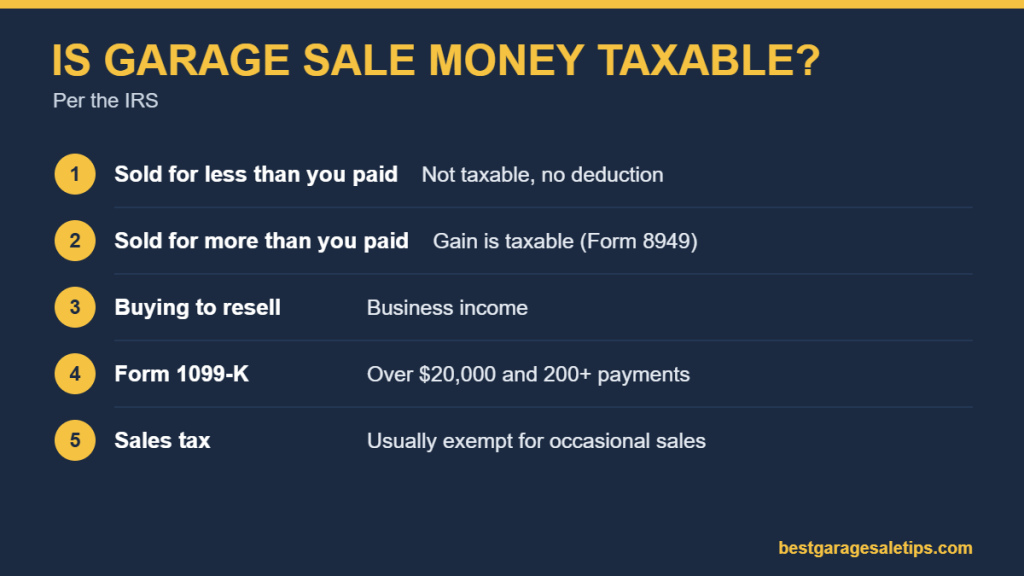
- Items sold at a loss (for less than you paid) aren’t taxable, and the loss can’t be deducted.
- Items sold at a gain (for more than you paid) are taxable. Your gain is what you got minus what you originally paid.
So a couch you bought for $800 and sold for $150 isn’t income. A vintage toy you paid $20 for and sold for $200 has a $180 gain, which is taxable.
When garage sale income is taxable
- You sell something for more than you paid. This happens with collectibles, antiques, vintage clothing, sports cards and similar items. Report the gain on Form 8949 and Schedule D.
- You buy things to resell. If you pick up items at thrift stores or other sales to flip them, that’s a business, and the profit is self-employment income. See our list of garage sale items to flip, and keep receipts.
- You hold sales all the time. Frequent sales with new inventory can look like a business, even if you call it a garage sale.
What about Venmo, PayPal and Form 1099-K?
If you take payments through apps, they may send you a Form 1099-K. The IRS says payment apps and online marketplaces must report when you receive over $20,000 in more than 200 transactions for goods or services, though you may still get one below that. A typical garage sale won’t come close. If you do get a 1099-K for personal items sold at a loss, the IRS says you can report it on Schedule 1 or Form 8949 so you aren’t taxed on it. Tag personal payments as “goods and services” only when you’re actually selling something. More on taking payments: using Venmo or Zelle at a garage sale.

Do you have to charge sales tax at a garage sale?
Usually not. Most states exempt occasional or “casual” sales of your own personal items, like a once-a-year garage sale, from sales tax. Rules differ by state, and frequent sellers may need a seller’s permit, so check your state’s department of revenue if you sell often. Some cities also require a garage sale permit; here’s how garage sale permits work.
Records worth keeping
- A simple list of what you sold and for how much
- Receipts or rough costs for anything valuable, like antiques or collectibles
- Payment app records, if you took digital payments
Related guides: where to donate unsold items and whether a garage sale is worth it.
FAQ
Do I have to report garage sale income to the IRS?
Not if you sold personal items for less than you paid. You do have to report gains, and you should report a 1099-K if you receive one.
Is money from selling used clothes taxable?
Almost never. Used clothing sells for far less than it cost new, so there’s no gain.
Can I deduct a loss from my garage sale?
No. Losses on personal items can’t be deducted.
This is general information, not tax advice. If you sell valuable items or resell for profit, talk to a tax professional.